Clients start welcoming transformation & wellbeing from just a single coaching session!
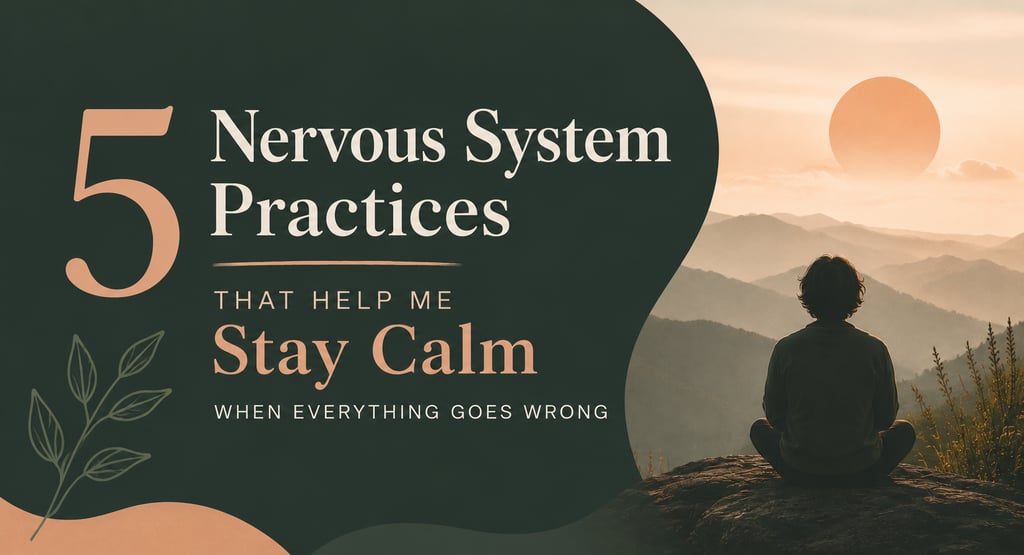
5 Nervous System Practices That Help Me Stay Calm When Everything Goes Wrong
Challenging situations have a way to amplify your deep seated fears. Soothing your fears instead of fighting them is an act of self-care. You may KNOW it. This post helps you with the HOW!
Priyanka Sawhney
6/4/20268 min read
Time flies by quickly. Especially when what you consider a big part of your life either pauses, halts or undergoes transformation.
It is Day 14.
Dad had a major haemorrhage, followed by brain surgery, and is now on ventilation.
I write this as I stand outside the ICU, waiting for the doctor to come out and update me about him. But I’m not writing this from a place of panic or emotional collapse. I’m writing this from a place of love: because over the last few days, I’ve watched so many attendants around me spiral into stress, fear, overthinking, and complete nervous system overwhelm while waiting for news about their loved ones.
One woman I spoke to hadn’t slept properly in days. Her mind wouldn’t stop racing. She asked me how I felt so calm & how she could do the same.
So I gently shared a few simple nervous system regulation tools with her to help calm her anxiety, settle her thoughts, and finally get some rest.
And that’s not something to feel guilty about.
Self-care is not selfish. In difficult moments, it becomes essential. When your mind and body feel safer, steadier, and more regulated, you’re able to show up better for both yourself and the people you love.
Because the truth is: when life feels uncertain, the mind naturally prepares for the worst. It goes into survival.
One thought turns into another. Then another. Before you even realise it, you’re catastrophising, overthinking every possibility, and imagining worst-case scenarios on repeat. (Just the mind protecting you.)
Logically, you know these thoughts aren’t helping. But emotionally and physically, your nervous system feels stuck in survival mode.
Your sleep gets affected. Your body stays tense. The thoughts refuse to stop. And eventually, you may start blaming yourself for not being “strong enough,” calm enough, or positive enough.
It’s exhausting.
I know that feeling deeply because I’ve lived it too.
Years ago, I was someone who struggled with recurring panic attacks for 13 years, chronic overthinking, and constant emotional overwhelm. I was so scared of what may show up & felt those weird sensations in my chest, my stomach and sometimes even felt I was dying.
But through years of inner work, nervous system healing, emotional regulation practices, and supporting clients through similar experiences, I have slowly become someone who can connect with her body & stay grounded even in difficult moments like these.
So in this blog, I want to share 5 nervous system practices that genuinely help me stay calm when everything feels uncertain, overwhelming, or out of control. Consistently practising these can be of immense value to you too.
Not toxic positivity.
Not “just think positive.”
Not pretending everything is okay.
Just simple practices that help your mind and body feel a little safer, calmer, and more supported — one moment at a time.
1. Stop Trying To Fix Negative Thoughts In A Moment Of Panic:
I know the dread.
The panic.
The fear.
The endless “what if” thoughts. The spiralling. The overthinking. The mind replaying every possible worst-case scenario and gathering evidence for why things may go wrong.
And sometimes, the environment around you only fuels it further — stressed people, uncertain situations, difficult updates, or emotionally overwhelming conversations.
Over time, I’ve realised something important:
A moment of panic is usually not the best time to force yourself into positive thinking.
When your nervous system is already overwhelmed and your body feels unsafe, anxious, or emotionally flooded, trying to replace negative thoughts with positive affirmations often changes very little.
Because in that moment, your body is not asking for perfection.
It’s asking for safety.
This is where many people unknowingly make things harder for themselves. They start fighting their thoughts, forcing positivity, analysing every feeling, or guilt-tripping themselves for “not handling things better.”
But honestly? That only creates more stress, shame, and emotional exhaustion.
When your nervous system is dysregulated, moving deeper into your head rarely helps. What helps more is emotional safety, grounding, compassion, and presence.
And if you truly love yourself, there’s no point comparing your emotional capacity to someone else’s ability to stay calm.
I've had people compare their healing journey or emotional regulation to mine — and trust me, it never made them feel better. Healing is deeply personal. Your nervous system has lived through experiences that shaped how it responds to stress, fear, uncertainty, and overwhelm.
So instead of trying to “fix” yourself in a moment of panic, try supporting yourself through it.
Your goal in difficult moments is not to become the calmest person in the room overnight.
Your goal is simply to help your mind and body feel a little safer, steadier, and more supported than they did a few moments ago.
That is enough. And that matters more than you think.
2. Address Your Fears & Learn To Self-Soothe:
All the dread in your body and mind is waiting for you to acknowledge it, address it, and be there for yourself.
Stressful situations often bring up old fears:
the fear of being left,
the fear of uncertainty,
the fear of loss,
and most of all, the fear of not being able to handle what comes next.
Louise Hay’s work has deeply transformed my life, and one thing she taught me is that many fears ultimately come down to one core wound:
“I am not good enough.”
In difficult moments, your nervous system may convince you that you are incapable, helpless, unsafe, or unequipped to deal with what’s happening. And unknowingly, you may keep scaring yourself further through overthinking, catastrophising, and imagining worst-case scenarios repeatedly.
But this is also the moment your body needs emotional safety the most.
One thing that helps me deeply during anxiety, overwhelm, or emotional stress is physically reconnecting with myself instead of disconnecting from my body.
I gently place my hand on my heart.
I rub my upper arms slowly.
I hold and massage my hands.
These simple grounding practices help calm my nervous system and bring me back to the present moment.
And then, I tell myself some of the most healing words a human being can hear:
I am here for you.
I will take care of you.
Because sometimes, the anxiety we feel as adults is also the younger version of us feeling unsafe again.
Maybe stressful situations felt overwhelming when you were a child. Maybe you didn’t always feel emotionally supported, protected, or safe during difficult moments. And now, when life feels uncertain, that same fear resurfaces in your mind and body.
But here’s what’s different now:
You are no longer that helpless child.
You are an adult now.
You can comfort yourself.
You can support yourself.
You can create emotional safety for yourself.
And no, you do not have to do it perfectly.
You are already doing the best you can, remember?
3. Feel The Fear Instead Of Fighting It:
After a bit of self-soothing, you may already notice that your mind and body feel slightly calmer than before.
This is the moment to pause for a few seconds, close your eyes gently, and bring your attention back to your body.
Because anxiety, stress, and fear are not just mental experiences. They live in the body too.
Notice what your body is feeling right now.
Is there tightness?
A heavy sensation?
Shallow breathing?
A lump in your throat?
A sinking feeling in your stomach?
Pressure in your chest or shoulders?
Instead of immediately trying to “fix” these sensations, simply observe them without judgment.
This is one of the most powerful nervous system regulation practices I’ve learned over the years: allowing your emotions to exist without resisting them.
Because resistance often intensifies anxiety.
The more you fight fear, suppress emotions, or force yourself to “calm down,” the more overwhelmed your nervous system can become.
So for a few moments, let the sensations be there.
Breathe slowly into the areas where you feel the fear most.
If your chest feels tight, breathe into your chest.
If your stomach feels tense, soften your breath there.
If your throat feels heavy, allow your breath to gently move through it.
Take slow, steady breaths and repeat this for a few minutes until your body begins to soften, even slightly.
This simple breathwork practice can help calm the fight-or-flight response, reduce emotional overwhelm, and bring your nervous system back into the present moment.
And most importantly, approach yourself with compassion.
If a child was frightened, overwhelmed, or hurting, you wouldn’t shame them for feeling scared. You would comfort them gently, hold space for them, and reassure them that they are safe.
Your body deserves that same love too.
So keep breathing.
Keep softening.
Keep reminding yourself:
It will be okay.
I am safe in this moment.
I can support myself through this.
4. Repeat Grounding Affirmations After Breathwork:
After doing the breathwork practice above, you may notice that your body feels slightly calmer, softer, and more regulated than before.
This is one of the best times to repeat calming affirmations.
When your nervous system shifts even slightly out of panic mode, the mind becomes more receptive to reassuring, grounding thoughts. Pairing affirmations with slow breathing can help reduce anxiety, calm overthinking, and create a greater sense of emotional safety within the body.
Some affirmations to repeat multiple times a day are:
I am safe.
I am enough.
I can handle this.
I am capable of dealing with anything life brings my way.
I trust myself to get through this.
Life supports me & takes care of me.
I am grounded. I am supported. I am okay.
You do not have to force yourself to believe every affirmation immediately.
Sometimes, simply hearing calming words repeatedly while breathing deeply is enough to help the nervous system settle over time.
Say them slowly.
Repeat them gently.
Place your hand on your heart while saying them.
Let your body receive those words with compassion instead of pressure.
Because emotional safety begins with learning how to speak to yourself more safely, gently, and lovingly.
5. Once You Feel Calm, Make A List Of What’s Still Supporting You:
After the breathwork and affirmations above, you may notice that your mind and body feel slightly calmer, softer, and more grounded than before.
This is a beautiful time to gently shift your focus toward what is still supporting you in this moment.
When anxiety, stress, or emotional overwhelm take over, the mind naturally starts focusing on what’s going wrong, what feels uncertain, and what may fall apart. This is part of the brain’s survival response.
But once your nervous system feels a little more regulated, it becomes easier to widen your perspective again.
One simple practice I deeply recommend is this:
Take a piece of paper and start writing down the positive aspects of your life and the things that are still working for you right now.
And start very simple.
The sky above you.
The air you’re breathing.
Water.
Your body carrying you through this moment.
Food nourishing you.
A bed to sleep in.
A loved one.
A kind message.
A moment of silence.
Your ability to rest, feel, hope, pray, or begin again.
Then slowly move into noticing the quieter forms of support in your daily life.
Maybe your body feels tired, but it is still functioning.
Maybe life feels uncertain, but support still exists around you.
Maybe your mind feels overwhelmed, but you are still showing up for yourself.
Maybe not everything is okay, but not everything is falling apart either.
This practice is not about forcing positivity or pretending difficult emotions don’t exist.
It’s about helping your nervous system recognise that alongside fear, uncertainty, and pain, there is still support, steadiness, beauty, and safety available too.
And physically writing these things on paper makes the experience feel more grounding and real for the mind and body.
So whenever you feel slightly calmer after regulating yourself, pause for a few minutes and ask gently:
What is still supporting me right now?
What is still working for me today?
Sometimes, this simple shift can help calm overthinking, reduce anxiety spirals, and bring you back to the present moment with a little more trust, perspective, and peace.
For further support: check the following resources: